Get the chance to win €100 alongside trusted feeding advice, helpful tips and the latest deals and competitions straight to your inbox.

At 9 weeks pregnant, you’re entering the last few weeks of your first trimester - how time flies!
Here’s a look at what to expect at 9 weeks pregnant, including how your little one’s developing, some of those 9 weeks pregnant symptoms, and our top tips on taking care of yourself and your baby as you look ahead to the rest of your pregnancy.
Your baby’s development at week 9 of pregnancy
Babies at 9 weeks pregnant are busy doing some serious growth and development. They’re laying foundations for their heart, brain, lungs and digestive system to develop, and their bones are starting to form too1.
Your baby’s genitals are also developing, but if you’re eager to know whether you’re expecting a girl or a boy, you’ll need to wait a few more weeks.
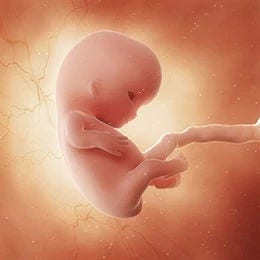
What does my baby look like, and how big are they at 9 weeks pregnant?
Your baby (now called a foetus) at 9 weeks is just over 2cm long from their head to their bottom - about the size of a strawberry. Their face, eyes, tongue and mouth have started to take shape (complete with tiny taste buds) as well as their little hands and feet1. Their budding limbs have distinct grooves that will soon turn into tiny fingers and toes.
What changes are happening in my body at 9 weeks pregnant?
You might notice your body starting to change physically now, too. Common signs of pregnancy at 9 weeks include bigger breasts, feeling thicker around the waist (it could be time for a maternity bra!) and increased vaginal discharge2.

Early pregnancy symptoms at 9 weeks
Many pregnant women at 9 weeks find that their pregnancy symptoms start to ease and feel more energised going into their second trimester1. However, that’s not always the case.
If you’re feeling tired, bloated or emotional, these are all common signs of pregnancy at 9 weeks. Let’s take a closer look at what you can expect from some of the 9 weeks pregnant symptoms.

Get the chance to win €100 alongside trusted feeding advice, helpful tips and the latest deals and competitions straight to your inbox.
By registering you're confirming you agree with our T.Cs and Privacy Policy. You can opt out anytime.
Breast tenderness
At 9 weeks pregnant, your breasts might feel sore, tender or even tingly as they grow, and your nipples might look darker than usual3. A well-fitting, supportive bra can help ease any aches or pains.
Feeling tired
For a lot of pregnant women at 9 weeks, pregnancy tiredness and fatigue are in full swing3. It’s hardly surprising if you feel like this – you’re growing another person after all!
It can be easier said than done, especially if you’re juggling work and other responsibilities, but try to get plenty of rest during your first trimester, when tiredness and fatigue are often the most intense3.
Morning sickness
Feeling or being sick in early pregnancy is commonly called morning sickness, although it can happen at any time of day3. It’s thought to be caused by your pregnancy hormones and tends to clear up by week 20 of pregnancy4.
Bloating and gas
Feeling bloated is one of the most common signs of pregnancy. You can thank the hormone progesterone, which relaxes the muscles in your womb to help it grow. At the same time, it can also relax the muscles in your digestive system, leading to issues like bloating, gas and heartburn5.
Headaches
Headaches in pregnancy aren’t harmful for your baby, but they can be unpleasant for you6. Make sure you drink plenty of water and get as much rest as you can. If you need to take a painkiller while pregnant, paracetamol is usually the best option, but always check this first with your healthcare professional.
Cravings and taste changes
There are a few taste and smell changes that you might notice at 9 weeks pregnant, like3:
- A metallic taste in your mouth
- Feeling more sensitive to certain smells (which can also trigger your morning sickness)
- Going off some tastes you used to enjoy
- Cravings for new or different foods
Cramping or bleeding
Most of the time, light bleeding or spotting in early pregnancy is either implantation bleeding or due to changes in your uterus7. You might also notice cramps caused by the ligaments in your stomach stretching, bloating or trapped wind8.
Often, cramping or spotting are nothing to be concerned about, but they can be signs of something more serious, so it’s always best to check with your GP or midwife if you’re experiencing either.
More trips to the loo
You might need to wee more than usual, including trips to the toilet in the middle of the night3. You might find this a bit annoying, especially if you’re feeling exhausted, but it’s essential to stay hydrated, so keep drinking lots of water.
Mood swings
Since the beginning of your pregnancy, levels of the pregnancy hormone human chorionic gonadotrophin (hCG) have been ramping up, and at 9 weeks pregnant, they’re right at their peak1. You also have other hormones like oestrogen and progesterone in the mix.
All those hormones can play havoc with your emotions, making you feel happy and excited one minute and in floods of tears over seemingly nothing the next. These feelings are very common 9 weeks pregnant symptoms and should settle down soon2.
Our tips for week 9 of pregnancy
Get plenty of sleep
Between morning sickness, toilet trips, bloating and headaches, pregnant women at 9 weeks can find it tough to get a good night’s sleep.
You can try to make some simple lifestyle changes to help you drift off more easily, like9:
- Getting fresh air and exercise during the day
- Trying relaxation techniques like gentle yoga before bed
- Eating healthy, balanced meals with plenty of fruit and veg
- Grabbing some extra pillows to help you get comfy
Fighting heartburn
It’s common to have heartburn during pregnancy - another symptom of your changing pregnancy hormones10.
If you’re struggling with heartburn, you can try10:
- Eating smaller meals more often, rather than 3 larger meals per day
- Not eating within 3 hours of going to bed
- Sitting up straight while eating and just after meals
- Propping your shoulders up with a pillow at night
Healthy snacking
Eating a healthy, balanced diet during pregnancy will help your baby to develop and grow, and support your body throughout the journey. You don’t need to ‘eat for 2’ while you’re pregnant – just try to eat lots of different foods for a good balance of nutrients11.
Some tasty snack ideas for pregnancy include11:
- Fresh fruit and vegetables
- Low-fat, lower-sugar fruit yoghurt
- A small sandwich with fillings like ham, tuna, salmon or sardines with salad
- Vegetable and bean soups

Stay hydrated
Drinking plenty of water is always important, but especially so during pregnancy. Staying hydrated has many benefits, including preventing constipation, which is a common symptom throughout pregnancy12.
Aim for between 6 and 8 200ml glasses of water and other fluids every day12. You could mix it up by trying sugar-free squash or decaf tea and coffee to help you get the fluids you need.
FAQs in week 9 of pregnancy
How much weight should I gain during pregnancy?
There’s a lot of variation in how much weight people gain during pregnancy, but it usually falls between 10kg and 12.5kg (or 22lb and 28lb)13.
What can I do if I’m feeling faint during pregnancy?
Feeling faint is fairly common during pregnancy, especially if you stand up too quickly. Try getting up nice and slowly from chairs, your bed, or the bath. If you feel faint while lying on your back, try turning onto your side14.
What can you expect at 9 weeks pregnant?
At 9 weeks pregnant, you might not have any symptoms at all, or you might be experiencing some classic early pregnancy symptoms like morning sickness, mood changes, or cravings. Every pregnancy is unique and there’s no right or wrong way to feel at this stage.
Is week 9 the hardest week of pregnancy?
At 9 weeks pregnant, your level of the pregnancy hormone hCG is at its highest, which can make any pregnancy symptoms feel more intense1. But remember, every pregnancy is different. You might be lucky and find week 9 a breeze – try not to compare your journey with anyone else’s.
What is the chance of miscarriage at 9 weeks?
Sadly, up to 20% of pregnancies end in early miscarriage (before 12 weeks). However, this risk drops to 10% after 6-7 weeks and 3-4% after the first trimester15. That’s why many people choose to wait until after their 12-week scan to tell family and friends that they’re expecting.
Will I have a 9 week scan?
The NHS and HSE don’t routinely offer a 9 week scan. Your first ultrasound, also called a dating scan or 12-week scan, usually happens between 8-14 weeks of pregnancy, and your midwife or GP will usually book your scan for you16, 17. If you haven’t had any information about your dating scan by 9 weeks, speak to your healthcare team.
- NHS Start for Life. Week 9 [online] Available at https://www.nhs.uk/start-for-life/pregnancy/week-by-week-guide-to-pregnancy/1st-trimester/week-9/ [Accessed May 2025]
- NHS (2021) You and your baby at 9 weeks pregnant [online] Available at at https://www.nhs.uk/pregnancy/week-by-week/1-to-12/9-weeks/ [Accessed May 2025]
- NHS (2022). Signs and symptoms of pregnancy [online] Available at https://www.nhs.uk/pregnancy/trying-for-a-baby/signs-and-symptoms-of-pregnancy/ [Accessed May 2025]
- NHS (2024). Vomiting and morning sickness [online] Available at https://www.nhs.uk/pregnancy/related-conditions/common-symptoms/vomiting-and-morning-sickness/ [Accessed May 2025]
- NHS Start for Life. Week 10 [online] Available at https://www.nhs.uk/start-for-life/pregnancy/week-by-week-guide-to-pregnancy/1st-trimester/week-10/ [Accessed May 2025]
- NHS (2024). Headaches in pregnancy [online] Available at https://www.nhs.uk/pregnancy/related-conditions/common-symptoms/headaches/ [Accessed May 2025]
- NHS (2024). Vaginal bleeding in pregnancy [online] Available at http://www.nhs.uk/pregnancy/related-conditions/common-symptoms/vaginal-bleeding/ [Accessed May 2025]
- NHS (2024). Stomach pain in pregnancy [online] Available at https://www.nhs.uk/pregnancy/related-conditions/common-symptoms/stomach-pain/ [Accessed May 2025]
- NCT. How to sleep better in pregnancy: 10 tips [online] Available at https://www.nct.org.uk/information/pregnancy/wellbeing-and-lifestyle-pregnancy/how-sleep-better-pregnancy-10-tips [Accessed May 2025]
- NHS (2023). Indigestion and heartburn in pregnancy [online] Available at https://www.nhs.uk/pregnancy/related-conditions/common-symptoms/indigestion-and-heartburn/ [Accessed May 2025]
- NHS (2023). Have a healthy diet in pregnancy [online] Available at https://www.nhs.uk/pregnancy/keeping-well/have-a-healthy-diet/ [Accessed May 2025]
- NHS Inform (2025). Eating well in pregnancy [online] Available at https://www.nhsinform.scot/ready-steady-baby/pregnancy/looking-after-yourself-and-your-baby/eating-well-in-pregnancy/ [Accessed May 2025]
- NHS (2022). Weight gain in pregnancy [online] Available at https://www.nhs.uk/pregnancy/related-conditions/common-symptoms/weight-gain/ [Accessed May 2025]
- NHS (2024). Common health problems in pregnancy [online] Available at https://www.nhs.uk/pregnancy/related-conditions/common-symptoms/common-health-problems/ [Accessed May 2025]
- Tommy's (2024). Miscarriage statistics [online] Available at https://www.tommys.org/baby-loss-support/miscarriage-information-and-support/miscarriage-statistics [Accessed May 2025]
- NHS (2023). 12-week scan [online] Available at https://www.nhs.uk/pregnancy/your-pregnancy-care/12-week-scan/ [Accessed May 2025]
- HSE. Ultrasound scans [online 2023]. Available at https://www2.hse.ie/pregnancy-birth/scans-tests/ultrasound-scans/ultrasound-scans/. [Accessed May 2025]
Last reviewed: October 2026
Reviewed by Nutricia’s Medical and Scientific Affairs Team
More from pregnancy


Pregnancy topics




Any more questions?
Our specialist baby advisors and experienced mums are here to talk and ready to help whenever you need them.
Email us
Send us an email (8am-8pm Mon-Fri, 10am-5pm Sat)
Call Us
Call us on 1800 570 570 (8am-8pm Mon-Fri, 10-5pm Sat)
FAQs
For all the latest information