Get the chance to win €100 alongside trusted feeding advice, helpful tips and the latest deals and competitions straight to your inbox.

Week 14 of your pregnancy is an exciting time! By now, you’ve probably had your first ultrasound scan, and could be starting to tell friends and family about your exciting new arrival!
As you settle into your second trimester, you might be wondering how your baby is developing, what 14 weeks pregnant symptoms to expect, and want to know more about the different ways to exercise during pregnancy.
Well, we’ve got you covered. Take a look below for what you need to know at 14 weeks pregnant.
Reviewed by Sammy, a registered midwife with a background in neonatal nursing, dedicated to providing compassionate, evidence based care to women and families throughout pregnancy, birth and the postnatal period.
14 weeks is how many months pregnant?
If you’re 14 weeks pregnant, that means you’re just over 3 months. You’re now into your second trimester, which some mums say was their favourite time of their pregnancy, as your energy levels return, and some common pregnancy symptoms start to ease1. If this is you, enjoy!
Your baby’s development at 14 weeks
At 14 weeks pregnant, your baby (or foetus) is getting the oxygen and nutrients they need from the placenta through your umbilical cord. You might not be able to feel it for another few weeks, but your baby’s starting to wriggle around and is busy moving and kicking inside your womb1.
They’re now swallowing small amounts of amniotic fluid, which passes through their body and out again as urine1.
How big is my baby, and what do they look like?
At 14 weeks pregnant, your baby is still pretty small in size. They’re now about 8.5cm from their head to their bottom, which is roughly the size of a kiwi fruit.
Though they’re still tiny, they’re starting to look more baby-like as their heads become rounder and more proportionate to the rest of their bodies1.

What can you see on the 14-week ultrasound scan?
Whilst there’s no specific 14-week ultrasound, your first scan will usually happen between 10 and 14 weeks pregnant. This is called your 12-week scan or dating scan.
This scan is used to get a better idea of how far along you are in your pregnancy and how your baby is developing. If you choose to have it, it can also be part of a screening for Down’s syndrome, Edwards’ syndrome, and Patau’s syndrome2.
Depending on your baby’s position, you might be able to see their head and face, arms, legs and body inside your womb on the ultrasound scan. Some parents-to-be even see their little one sucking their thumb! At some hospitals, you can take a picture from the ultrasound scan home with you (there might be a small charge for this)3.
What changes are happening in my body at 14 weeks pregnant?
As your pregnancy progresses, you’ll start to notice a number of changes to your body.
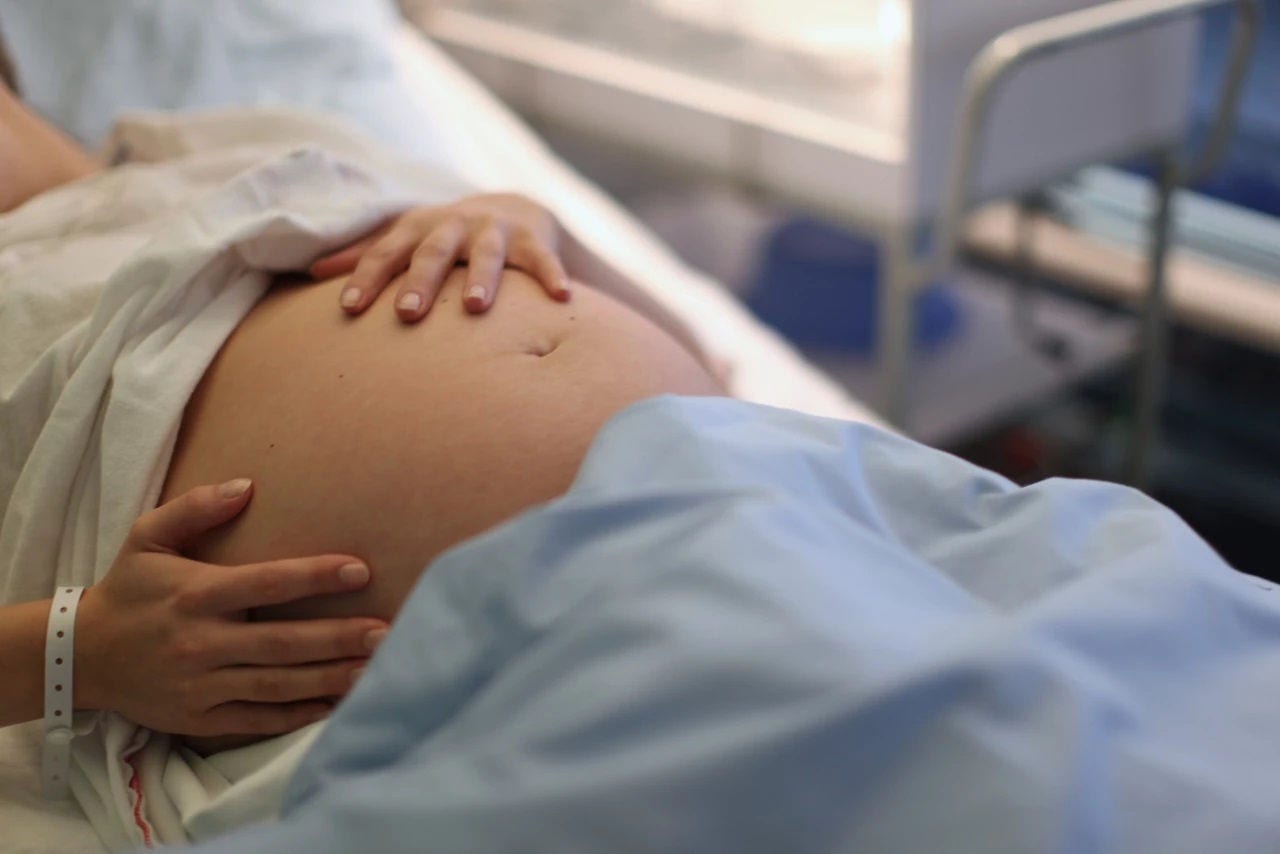
If you haven’t already, you’ll soon be able to see a small baby bump as your baby grows and your uterus expands with them4. It’s normal not to start showing until your second trimester if this is your first pregnancy, but you might notice your baby bump a little earlier if you’ve had a baby before5.
Around 14 weeks pregnant, you might also start to spot some yellow stains in your bra. That’s because your body’s getting ready to breastfeed and starting to produce your first milk, which is called colostrum1.
Common pregnancy symptoms at 14 weeks
At 14 weeks pregnant, symptoms you experienced in your first trimester might have settled down (although for some expectant mums they stick around for longer). You may also feel like you’re less tired and have more energy than you did during the first trimester.
Here’s a look at some of the 14 weeks pregnant symptoms you might notice at this point in your pregnancy1.
- Bleeding gums
- Sharp round ligament pains in the side of your stomach caused by your growing bump
- Feeling bloated or constipated (eat plenty of fibre to keep things moving!6)
- Getting hot or dizzy
- Leg cramps, especially at night
- Headaches
- Nosebleeds
- Indigestion and heartburn
- Swollen hands or feet (call your midwife or GP straight away if you have swelling in your hands, feet or face that comes on suddenly7)
- Urine infections (see your GP if you’re experiencing pain when you pee8)
- Vaginal infections like thrush (with symptoms like lumpy discharge or itching around your vagina9)
Exercise at 14 weeks pregnant
With the newfound energy you might have at 14 weeks pregnant, you might feel ready to put it to good use. Exercise during pregnancy is a great way to stay healthy and prepare for labour, and has lots of benefits for both you and your little one.
You can explore the benefits of exercise during pregnancy below, and read our top tips for exercising safely.
Benefits of exercise during pregnancy
There are lots of great reasons to stay active during pregnancy.
Exercising throughout pregnancy can:
- Build the strength you need to carry the extra weight of your baby as your pregnancy progresses10
- Help prepare your body for labour10
- Improve your mood11
- Help you sleep better11
- Ease common pregnancy symptoms like constipation6
So there are plenty of good reasons to keep moving while pregnant for as long as you feel up to it, even if it’s just a gentle stroll once a day.
Tips on exercising safely while pregnant
Exercise during pregnancy is safe for your baby – in fact, expectant mums who stay active are less likely to experience issues during pregnancy and labour10.
That said, whether you’re new to exercise or a seasoned pro, remember to take it easy – now is not the time to enter a marathon! There are some guidelines to stick to to keep yourself and your little one safe while you keep moving.
- Don’t go too hard, especially if you weren’t active before you got pregnant. As a general rule, you should be able to hold a conversation during any pregnancy exercises10
- Always warm up and cool down to avoid exercise-related injuries10
- Avoid exercises with a risk of falling (e.g. horse riding) or being hit (e.g. kickboxing)10
- Swimming is great for supporting your bump, but avoid scuba diving10
- Avoid lying on your back for long periods, especially once you reach 16 weeks pregnant10
- If you try any exercise classes, use a qualified instructor who knows you’re pregnant and how far along you are, so they can give you adaptations when necessary10
Pregnancy exercises to try at 14 weeks pregnant
Try some of these pregnancy exercises to stay fit and healthy for pregnancy and labour10:
- Core strengthening exercises to help ease backache – try starting on all fours, pulling your abdominal muscles up to the ceiling, holding for a few seconds and repeating.
- Pelvic floor exercises in pregnancy to prepare for labour – strengthen your pelvic floor muscles by squeezing them together (as though you’re trying to stop yourself from going to the loo) and releasing repeatedly
- Antenatal yoga – there are lots of benefits to antenatal yoga (yoga designed for pregnancy), such as learning breathing techniques and supporting your mental health12.
- NHS Start for Life. Week 14 [online] Available at https://www.nhs.uk/start-for-life/pregnancy/week-by-week-guide-to-pregnancy/2nd-trimester/week-14/ [Accessed May 2025]
- NHS (2025). Screening for Down's syndrome, Edwards' syndrome and Patau's syndrome [online] Available at https://www.nhs.uk/pregnancy/your-pregnancy-care/screening-for-downs-edwards-pataus-syndrome/ [Accessed February 2026]
- NHS (2023). Ultrasound scans in pregnancy [online] Available at https://www.nhs.uk/pregnancy/your-pregnancy-care/ultrasound-scans/ [Accessed May 2025]
- NHS Start for Life. Week 13 [online] Available at https://www.nhs.uk/start-for-life/pregnancy/week-by-week-guide-to-pregnancy/2nd-trimester/week-13/ [Accessed May 2025]
- NHS Start for Life. Week 4 [online] Available at https://www.nhs.uk/start-for-life/pregnancy/week-by-week-guide-to-pregnancy/1st-trimester/week-4/ [Accessed May 2025]
- NHS (2024). Common health problems in pregnancy [online] Available at https://www.nhs.uk/pregnancy/related-conditions/common-symptoms/common-health-problems/ [Accessed May 2025]
- NHS (2024). Swollen ankles, feet and fingers in pregnancy [online] Available at https://www.nhs.uk/pregnancy/related-conditions/common-symptoms/swollen-ankles-feet-and-fingers/ [Accessed May 2025]
- NHS (2022) Urinary tract infections (UTIs) [online] Available at https://www.nhs.uk/conditions/urinary-tract-infections-utis/ [Accessed May 2025]
- NHS Start for Life. Week 15 [online] Available at https://www.nhs.uk/start-for-life/pregnancy/week-by-week-guide-to-pregnancy/2nd-trimester/week-15/ [Accessed May 2025]
- NHS (2023). Exercise in pregnancy [online] Available at https://www.nhs.uk/pregnancy/keeping-well/exercise/ [Accessed May 2025]
- NHS (2024). Mental health in pregnancy [online] Available at https://www.nhs.uk/pregnancy/keeping-well/mental-health/ [Accessed May 2025]
- Tommy's (2023) Yoga in pregnancy [online] Available at https://www.tommys.org/pregnancy-information/im-pregnant/exercise-in-pregnancy/yoga-pregnancy [Accessed May 2025]
Last reviewed: August 2026
Reviewed by Nutricia’s Medical and Scientific Affairs Team
More from pregnancy


Pregnancy topics




Get the chance to win €100 alongside trusted feeding advice, helpful tips and the latest deals and competitions straight to your inbox.
By registering you're confirming you agree with our T.Cs and Privacy Policy. You can opt out anytime.
Any more questions?
Our specialist baby advisors and experienced mums are here to talk and ready to help whenever you need them.
Email us
Send us an email (8am-8pm Mon-Fri, 10am-5pm Sat)
Call Us
Call us on 1800 570 570 (8am-8pm Mon-Fri, 10-5pm Sat)
FAQs
For all the latest information