Get the chance to win €100 alongside trusted feeding advice, helpful tips and the latest deals and competitions straight to your inbox.

Now you’re 20 weeks pregnant, you’re officially classed as halfway through your pregnancy!
There are lots of exciting things going on now – you might be able to feel your baby’s first movements, and you’ll soon have your 20-week scan which is another chance to see your little one in the womb.
From kicks to constipation, here’s everything you need to know about you and your baby at 20 weeks pregnant.
Reviewed by Sammy, a registered midwife with a background in neonatal nursing, dedicated to providing compassionate, evidence based care to women and families throughout pregnancy, birth and the postnatal period.
How many months is 20 weeks pregnant?
At 20 weeks pregnant, you’re around 5 months pregnant. You’re classed as halfway through your pregnancy now – congratulations!
Your baby at 20 weeks pregnant
Your baby is now a 20-week foetus, and they’re growing and developing all the time.
How big is your baby at 20 weeks?
Your baby’s size at 20 weeks is around that of a banana at 25.6cm long1. They’re measured from their head to their heel now (instead of from their head to their bottom) because their legs aren’t as curled up anymore.

Baby’s development milestones
At 20 weeks pregnant, your baby’s skin is covered in a greasy layer of something called ‘vernix’, which protects their delicate skin while they’re floating around in amniotic fluid1.
They’re also getting more and more active, and you might start to feel them moving around for the first time inside your 20-week bump1. At first, their wriggles will probably feel like fluttering or swirling. When your baby gets bigger, you’ll be able to feel every kick and movement.
As well as moving around, your baby is practicing their sucking reflex and might be sucking their thumb. This helps them get ready to feed once they’re born1.
Your body at 20 weeks pregnant
Common symptoms at 20 weeks
At 20 weeks pregnant, you might notice symptoms, like:
Back and pelvis pain
As your 20 weeks pregnant bump grows, it can put more pressure on your back and pelvis. Try not to stand up for too long and make sure you’re wearing flat, comfy shoes to help relieve any pain2.
Swollen legs and ankles
You might notice some water retention, which causes your legs and ankles to feel swollen, especially towards the end of the day. You can help your circulation by going on a walk every day and resting with your feet up when you can2.
Constipation
Your pregnancy hormones and growing baby can make you feel constipated during pregnancy. To help keep things moving, try to eat plenty of fibre every day, exercise regularly, and drink lots of water3.
Sore or bleeding gums
Hormonal changes during pregnancy can mean that plaque builds up more easily around your gums, which can make them bleed2. Keep looking after your teeth by brushing twice a day – you can switch to a soft-bristled toothbrush if that feels nicer on your gums.
Your 20-week bump & physical changes
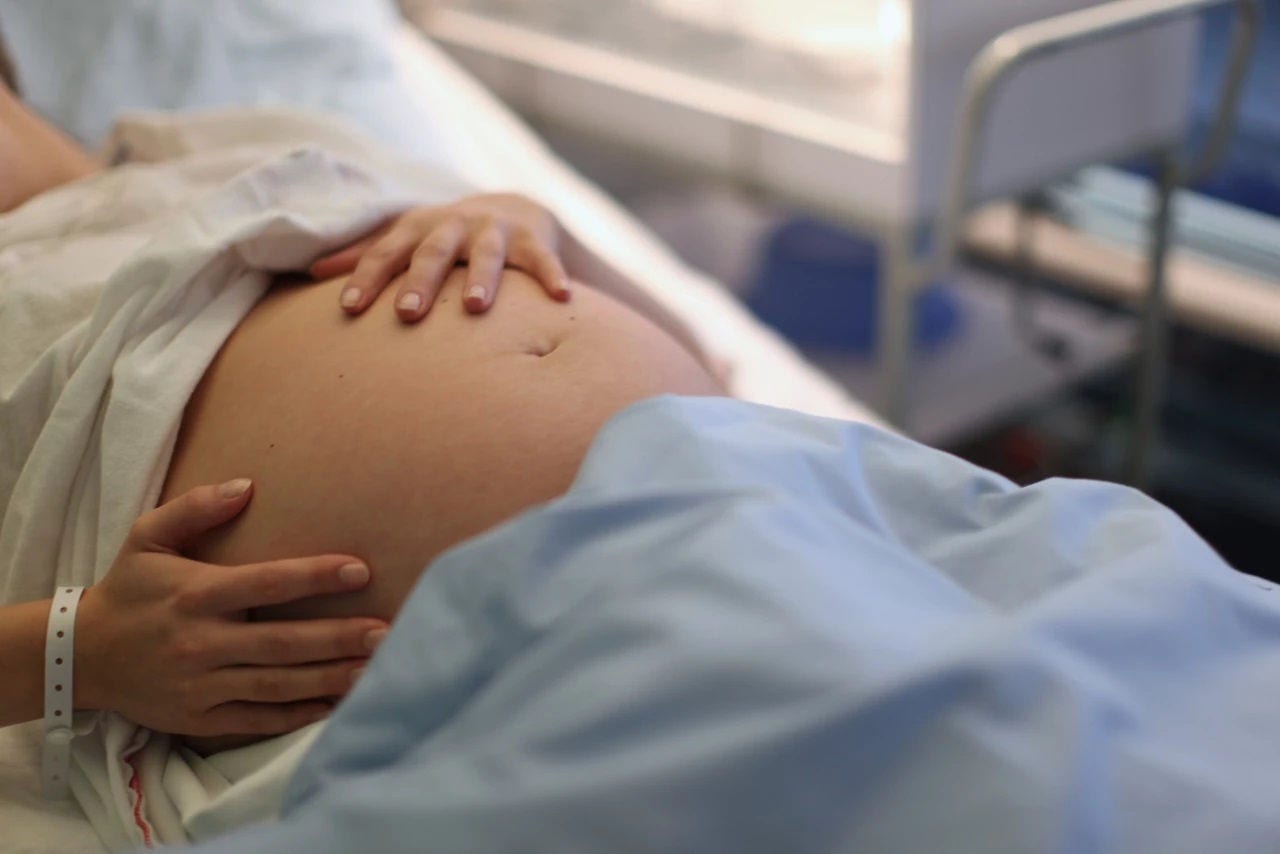
Your 20 weeks pregnant bump is continuing to grow along with your baby, which can bring some other physical changes along with it.
You might notice some stretch marks on your bump, thighs and breasts as the skin stretches. They can look like narrow, red, purple or brown streaks. They’re completely harmless and often fade to be less noticeable once your baby’s born4.
You could also spot a dark line down the middle of your bump, which is called a ‘linea nigra’. This is also completely normal and will likely fade away after pregnancy5.
Things to think about at 20 weeks pregnant
Here are some of the things you might want to start thinking about at 20 weeks pregnant:
Your 20-week scan
Around now you’ll have your 20-week ultrasound scan (sometimes called a mid-pregnancy scan or fetal anomaly scan). This scan is done to check how your baby’s developing and whether they have any signs of 11 different conditions like spina bifida6.
The scan usually takes around half an hour and will happen at your local hospital, clinic, or health care centre.
It’s a good idea to7:
- Arrive nice and early
- Wear loose clothes so it’s easy to get to your tummy
- Bring your maternity notes if you have a physical copy
- Have a full bladder before the scan (if you’ve been told that you need it)
- Check with the hospital if you can get pictures of your baby from the scan and whether you’ll need to pay for them (you might need to bring cash if so!)
Depending on your hospital and your baby’s position, you might also be able to find out whether you’re having a boy or a girl. If you’d like to be surprised, make sure you tell your sonographer at the start of your appointment so they can keep that information a secret6.
Strengthening your pelvic floor
The muscles of your pelvic floor are put under a lot of strain during pregnancy and labour. But there are things you can do to strengthen those muscles to make life easier for you while carrying and giving birth to your baby.
Try following these steps to exercise your pelvic floor muscles8:
- Lie or sit down comfortably
- Squeeze your pelvic floor - as though you were trying to stop yourself from going to the toilet
- Release
You can do these squeezes quickly at first, then try holding the squeeze for longer each time. Aim to do 8 sets of squeezes 3 times a day to really strengthen those muscles. You could do them around the same time as each meal you have to help you remember.
Things you’ll need when your baby arrives
Don’t worry about rushing out to stock up on everything just yet. You have plenty of time to get ready! But it can be exciting to look at what’s out there and start making a list of the things you’ll need.
Depending on whether you already have children, you might need to look for things like baby clothes, nappies, a pushchair, and a car seat to name a few. If you’re planning on having a baby shower, you might even want to pop some of these things on a registry.
- NHS Start for Life. Week 20 [online] Available at https://www.nhs.uk/start-for-life/pregnancy/week-by-week-guide-to-pregnancy/2nd-trimester/week-20/ [Accessed August 2025]
- HSE (2022). What to expect in the second trimester [online] Available at https://www2.hse.ie/pregnancy-birth/baby-development-pregnancy-stages/stages/second-trimester/ [Accessed August 2025]
- NHS (2024). Common health problems in pregnancy [online] Available at https://www.nhs.uk/pregnancy/related-conditions/common-symptoms/common-health-problems/ [Accessed August 2025]
- NHS (2022). Stretch marks in pregancy [online] Available at https://www.nhs.uk/pregnancy/related-conditions/common-symptoms/stretch-marks/ [Accessed August 2025]
- HSE (2023). Skin problems during pregnancy [online] Available at https://www2.hse.ie/conditions/skin-problems-pregnancy/ [Accessed August 2025]
- HSE (2023). Fetal anatomy scan [online] Available at https://www2.hse.ie/pregnancy-birth/scans-tests/ultrasound-scans/fetal-anatomy-scan/ [Accessed August 2025]
- NHS (2024). 20-week screening scan [online] Available at https://www.nhs.uk/pregnancy/your-pregnancy-care/20-week-scan/ [Accessed August 2025]
- NHS (2023). Exercise in pregnancy [online] Available at https://www.nhs.uk/pregnancy/keeping-well/exercise/ [Accessed August 2025]
Last reviewed: August 2026
Reviewed by Nutricia’s Medical and Scientific Affairs Team

Get the chance to win €100 alongside trusted feeding advice, helpful tips and the latest deals and competitions straight to your inbox.
By registering you're confirming you agree with our T.Cs and Privacy Policy. You can opt out anytime.
More from pregnancy


Pregnancy topics




Any more questions?
Our specialist baby advisors and experienced mums are here to talk and ready to help whenever you need them.
Email us
Send us an email (8am-8pm Mon-Fri, 10am-5pm Sat)
Call Us
Call us on 1800 570 570 (8am-8pm Mon-Fri, 10-5pm Sat)
FAQs
For all the latest information