Get the chance to win €100 alongside trusted feeding advice, helpful tips and the latest deals and competitions straight to your inbox.

It might be hard to believe, but at 21 weeks pregnant, you’re now over halfway through your pregnancy and well into your second trimester - how time flies!
This week, your baby is growing rapidly, practicing some vital skills - including sucking and breathing - that will help prepare them for the world beyond the womb1. Here we’re exploring what’s happening for your baby at 21 weeks pregnant, some common pregnancy symptoms, and how your body’s changing as your bump gets bigger.
How many months pregnant am I at 21 weeks?
21 weeks pregnant in months is 5. That’s right, you’re now in month 5 of your pregnancy, and there’s not too long to wait until you get to meet your little one for the very first time.
How big is my baby at 21 weeks?
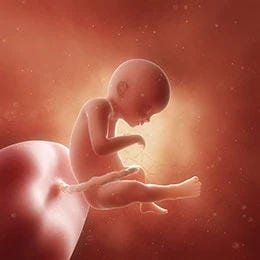
Your baby at 21 weeks pregnant is approximately 26.7cm from their head to their toes. For context, that’s around the size of a carrot1. By now, they’re weighing in at around 350g, which is more than the placenta2.
Your baby, or 21-week-old foetus, is now developing something called ‘lanugo’. This is a fine, downy hair that will keep your little one at just the right temperature as they grow (just think ofit as your baby’s very own fur coat)1.
Your growing baby: hearing, movement, and more
There are several key developments for your baby this week. Let’s take a look.
Hello in there! Your baby’s hearing
At 21 weeks pregnant, your baby can now hear various noises both inside and outside your womb, for example, your heartbeat and your digestive system3.
They can also hear your voice, so this is a great time to talk to your bump to help develop the bond between you and your baby. You could even try singing to them, or reading them a story, and you may find that they kick or move around in response3.
Peekaboo: your baby’s developing eyes
At 21 weeks, your baby’s eyes are still developing, and their eyelids remain shut, and they won’t open until the end of your second trimester4. However, if you could see them now, you’d see that they’re now developing eyebrows1.
Rolling and tumbling: your baby’s movements
Your baby is moving around a lot at this point in your pregnancy, and by now, you may well have started to feel kicks, rolls, swishes, and flutters. If this is your first baby, you may not have felt your baby move yet. Keep an eye on things, and if you’ve not felt anything by week 24, get in touch with your midwife so they can check that all is well5.
You may soon notice that your baby is starting to settle into patterns of sleeping and waking. However, don’t be surprised if your baby is wide awake and rolling around just as you want to go to sleep - their sleeping patterns are unlikely to match yours! If this is disrupting your sleep, rest up when you can during the day, and take any opportunity to have a nap1.
Your Body and Bump at 21 Weeks
As your baby gets bigger, so does your growing 21-weeks-pregnant bump. By now, you’ll start to look pregnant1, and the changes that have been going on inside your body will begin to become more noticeable. When it comes to the size of your bump, every woman is different. Your midwife will check your bump at your antenatal appointments to make sure your baby (and your bump) is growing well.
At 21 weeks pregnant, it might be time to start looking at maternity clothes. You don’t have to spend a fortune - especially since you’re unlikely to be wearing them for long. Seb’s mum says, “I asked my friends and family members who had been through pregnancy, and they were happy to pass down their maternity clothes. It was brilliant - they were barely worn and I didn’t have to spend any money! Online resale websites also became my best friend here!”
Your baby bump can leave you feeling a little unsteady on your feet, because of your joints being looser and your centre of gravity changing. To avoid taking a tumble, take care when you’re out and about and when you’re at home. While you might be eager to get things ready for your new arrival, this isn’t the time for any heavy lifting home decor!
Common pregnancy symptoms at 21 weeks
From backache and Braxton Hicks to changes in your skin and appetite, let’s take a look at some of those 21 weeks pregnant symptoms and why they might be happening.
Managing backache and discomfort
Backache could also be due to the position your baby is in, as this can cause discomfort from time to time6.
If you’re struggling with backache, give our top tips a try7:
- Avoid lifting anything heavy.
- Get plenty of rest. This could also be the perfect time to treat yourself to a well-deserved pregnancy massage.
- Use maternity pillows to help keep your back straight and supported when sitting.
- Have a relaxing soak in a warm bath.
- Wear flat shoes and be sure to move your feet as you turn; this will help prevent twisting your spine.
- If you need to pick something up from the floor (including toddlers!), keep your back straight and bend your knees.
Unless you’ve been advised not to by your doctor or midwife, you can take paracetamol to help you manage any pain. Always follow the instructions on the pack, and if you’re unsure, talk to your midwife first.
Understanding Braxton Hicks Contractions
If you’ve had other friends or family who have had children, or if you’ve been pregnant before, you might have heard about Braxton Hicks contractions. These are also sometimes called ‘practice contractions’ or ‘false labour pains’.
Some women describe them as a kind of ‘tightening’ across their bump, similar to mild period pain, and your bump may feel quite hard as they come and go. Braxton Hicks contractions aren’t usually painful and happen when your womb contracts and relaxes8.
“I remember when I had Braxton Hicks contractions with my first baby. It was a little unsettling, so I called the Maternity Assessment Unit. It turned out to be just a practice run, and when my labour finally arrived, I could definitely tell the difference - I just knew it was time.” (Sylvie’s mum).
Not everyone has Braxton Hicks, but if you do, they’ll likely happen in your second trimester or later in your pregnancy8.
Changes in your skin
While some women experience a pregnancy ‘glow up’ in terms of their skin and hair, the pregnancy hormones in your body can also cause other changes too.
Itchy skin is fairly common at 21 weeks pregnant and is typically due to increasing hormone levels. Your skin may also start itching as it stretches across your growing bump. Wearing loose clothing, using a soothing moisturiser, and enjoying a cool bath can help to ease any discomfort9.
Very occasionally, itchy skin can be a symptom of a liver condition called intrahepatic cholestasis of pregnancy (ICP). If you experience more intense itching on your feet and hands, or if it worsens at night, call your doctor or midwife, who can monitor this condition during your pregnancy9.
Other skin changes during pregnancy include1:
- Stretch marks. Thin, pink, red, or brown streaks across your skin that are harmless and usually fade after the birth of your baby.
- Patches of brown or darkened skin on your face. This is known as chloasma or the ‘mask of pregnancy.
- ‘Linea negra’, which is a dark line down the middle of your bump10.
- Your skin is greasier or spottier than usual.
Appetite changes
Changes to your appetite during pregnancy are thought to be caused by hormonal changes that affect your sense of taste and smell11.
Pregnancy cravings are pretty famous in the world of pregnancy symptoms. They tend to start early on in pregnancy and reach their peak by the end of the second trimester12. Pregnancy cravings aren’t harmful, but it’s a good idea to make sure you’re sticking to a healthy, balanced pregnancy diet and limit any foods that are high in sugar, saturated fats, and salt if that’s what you’re craving.
As well as food cravings, you may find yourself developing a dislike of foods you previously enjoyed, and/ or developing a metallic taste in your mouth.
Some women experience what’s known as ‘pica’, which means they crave non-food items (like dirt or chalk). This could indicate a lack of iron, so speak to your midwife if this is happening to you11.
Tips for a healthy week 21
Let’s take a look at how healthy, nutritious choices and exercising safely can help you and your baby have a healthy week at 21 weeks pregnant.
Enjoying a healthy diet
There’s no need to follow a special diet during your pregnancy (unless you’ve been advised otherwise by your doctor or midwife). There’s also no need for you to ‘eat for two’, even if you’re feeling a little hungrier than usual13.
Instead, stick to a healthy and balanced diet, including13:
- Fruit and vegetables.
- Carbohydrates - these will give you the energy you need, so enjoy things like bread, potatoes, rice, and cereals. Opt for wholemeal varieties where you can
- Proteins such as lean poultry, eggs, and fish. If you don’t eat meat or other animal products, add beans, pulses and nuts to your diet.
- Dairy. Cheese, milk, and yoghurt (opt for low-fat items) are just a few examples of foods that will provide you with calcium. Dairy-free alternatives include soya,

Exercising safely during your pregnancy
As long as you do so safely, there are lots of benefits to exercising during your pregnancy. For example, it can help you maintain a healthy weight and prepare your body for labour and birth14.
There are numerous pregnancy-safe exercises to choose from, including swimming, running, walking, and yoga, to name a few. And don’t forget to keep up with those all-important pelvic floor exercises! We talk more about those at week 20.
Your pregnancy checklist for week 21
Here are a few things to think about ahead of your little one’s arrival:
- Think about whether you’d like to attend antenatal classes.
- Take your vitamin D, and any other antenatal vitamins or supplements you’ve been advised to take by your doctor or midwife.
- While you’re not obliged to tell your employer about your pregnancy just yet, you may feel that you’re ready. It’s also a good idea to read up on your maternity rights.
- Keep an eye on how you’re feeling, and always reach out for support if you need it.
- NHS. Better Start in Life. Week 21 [online]. Available at https://www.nhs.uk/start-for-life/pregnancy/week-by-week-guide-to-pregnancy/2nd-trimester/week-21/. [Accessed September 2025]
- NHS 111 Wales. Pregnancy Guide [online 2023]. Available at https://111.wales.nhs.uk/doityourself/pregnancy/21to24weeks/ [Accessed September 2025]
- NHS inform. How your baby develops week to week [online 2025]. Available at https://www.nhsinform.scot/ready-steady-baby/pregnancy/your-baby-s-development/how-your-baby-develops-week-to-week/#week-17-to-24. [Accessed September 2025].
- NHS Hull University Teaching Hospitals. Pregnancy: What you need to know for the second trimester [online 2018]. Available at https://www.hey.nhs.uk/news/2018/04/25/pregnancy-what-you-need-to-know-for-the-second-trimester/. [Accessed September 2025]
- NHS. Your baby's movements [online 2024]. Available at https://www.nhs.uk/pregnancy/keeping-well/your-babys-movements/. [Accessed September 2025]
- NHS Gloucestershire Hospitals. Looking after your back and pelvis in pregnancy [online 2022]. Available at https://www.gloshospitals.nhs.uk/your-visit/patient-information-leaflets/looking-after-your-back-and-pelvis-in-pregnancy-/ [Accessed September 2025]
- NHS. Back pain in pregnancy [online 2024]. Available at https://www.nhs.uk/pregnancy/related-conditions/common-symptoms/back-pain/. [Accessed September 2025]
- Tommy's. What are Braxton Hicks? [Online 2023]. Available at https://www.tommys.org/pregnancy-information/giving-birth/braxton-hicks. [Accessed September 2025]
- NHS. Itching and intrahepatic cholestasis of pregnancy [online 2023]. Available at https://www.nhs.uk/pregnancy/related-conditions/complications/itching-and-intrahepatic-cholestasis/. [Accessed September 2025]
- HSE. Skin problems during pregnancy [online 2023]. Available at https://www2.hse.ie/conditions/skin-problems-pregnancy/ [Accessed September 2025]
- NHS Better Start in Life. Week 5 [online]. Available at https://www.nhs.uk/best-start-in-life/pregnancy/week-by-week-guide-to-pregnancy/1st-trimester/week-5/ [Accessed September 2025]
- Orloff NC, Hormes JM. Pickles and ice cream! Food cravings in pregnancy: hypotheses, preliminary evidence, and directions for future research. Front Psychol. 2014 Sep 23;5:1076. doi: 10.3389/fpsyg.2014.01076. PMID: 25295023; PMCID: PMC4172095.
- NHS. Have a healthy diet in pregnancy [online 2023]. Available at https://www.nhs.uk/pregnancy/keeping-well/have-a-healthy-diet/. [Accessed September 2025]
- NHS. Exercise in pregnancy [online 2023]. Available at https://www.nhs.uk/pregnancy/keeping-well/exercise/. [Accessed September 2025]
Last reviewed: November 2026
Reviewed by Nutricia’s Medical and Scientific Affairs Team

Get the chance to win €100 alongside trusted feeding advice, helpful tips and the latest deals and competitions straight to your inbox.
By registering you're confirming you agree with our T.Cs and Privacy Policy. You can opt out anytime.
More from pregnancy




Pregnancy topics



Any more questions?
Our specialist baby advisors and experienced mums are here to talk and ready to help whenever you need them.
Email us
Send us an email (8am-8pm Mon-Fri, 10am-5pm Sat)
Call Us
Call us on 1800 570 570 (8am-8pm Mon-Fri, 10-5pm Sat)
FAQs
For all the latest information