Get the chance to win €100 alongside trusted feeding advice, helpful tips and the latest deals and competitions straight to your inbox.

At 19 weeks pregnant (or 19 weeks gestation), you’re almost halfway through your pregnancy. There’s lots going on both inside and outside your body, including your growing bump and your upcoming 20-week scan.
Here we cover everything you need to know at this point in your pregnancy, from your baby’s size at 19 weeks to our tips on having a healthy, happy pregnancy.
Reviewed by Sammy, a registered midwife with a background in neonatal nursing, dedicated to providing compassionate, evidence based care to women and families throughout pregnancy, birth and the postnatal period.
What is 19 weeks in months?
At 19 weeks pregnant, you’re almost 5 months into your pregnancy and almost halfway to your due date.

Get the chance to win €100 alongside trusted feeding advice, helpful tips and the latest deals and competitions straight to your inbox.
By registering you're confirming you agree with our T.Cs and Privacy Policy. You can opt out anytime.
How big is your baby at 19 weeks?
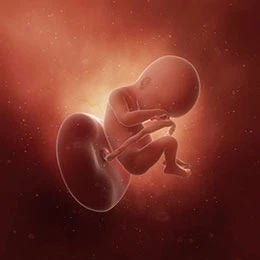
Your baby’s size at 19 weeks is just over 15cm long from their head to their bottom, or about the size of a beef tomato1.
You could start to feel your little one moving around inside your womb now, but since they’re still so little, it might feel like a bubbling, fluttering feeling. As your baby grows, you’ll start to notice clearer kicks and rolls.
Your baby’s development at week 19
Your baby’s developing senses
At 19 weeks pregnant, your baby’s taste buds are fully formed and functional2. However, your little one won’t be able to taste the amniotic fluid they swallow until around week 30 of your pregnancy3.
By now, your baby can hear different sounds and voices. They’ll be able to recognise your voice, and you may even find that they respond by moving around or kicking when your talk to them4.
Vernix caseosa: extra protection for your baby
Soon, your baby will start to develop a sticky, white coating on their skin called ‘vernix’ or ‘vernix caseosa’5. The vernix helps protect your baby’s delicate skin while they’re in the womb, as well as in the first few days after birth6.
While it might be tempting to wash it off once your baby’s born, doctors recommend leaving it on because it helps protect from infection and keep your baby’s soft skin moisturised.
Common pregnancy symptoms at 19 weeks
Pregnant women at 19 weeks might find that they have fewer first-trimester symptoms now. However, a pregnancy hormone called ‘relaxin’ may start to loosen your ligaments, which can cause other symptoms to appear1.
Round ligament pain
Changes in the hormones that affect your ligaments, as well as your growing bump, can cause the round ligaments around your stomach to stretch. This can sometimes be painful, and feel like a sharp jabbing around your lower tummy – particularly on the right side7.
The good news is that round ligament pain isn’t harmful to your baby, and there are some things you can do to help reduce the pain. For example7:
- Avoid arching your back if you’re sitting or standing
- Squeeze your abdominal muscles in when you move to help support your bump
- Try bending your hips before you cough, sneeze or laugh
Light exercise classes like pregnancy yoga and aquanatal classes are also great ways to keep your body moving and ease any discomfort you might be feeling.

Leg cramps
It’s normal for pregnant women at 19 weeks to experience painful spasms in their calf muscles and feet, particularly at night8. There’s no clear cause of these leg cramps, but they might happen if your leg muscles are tired or due to changes in your circulation.
You can try to ease the cramp by8:
- Pulling your toes up to stretch your calf muscle
- Rubbing the muscle hard
Stay active if you can and keep hydrated by drinking plenty of water.
Backache
The changes happening in your body at 19 weeks pregnant might also cause some back pain. Your posture and hormones are both changing to accommodate your growing baby, and you might be feeling more tired too, which can make backache feel worse9.
There are some things you can do to help ease backache during pregnancy, like9:
- Focusing on your posture and keeping your back as straight as you can
- Supporting your bump with your hands while standing
- Wearing comfy, supportive shoes
- Getting as much rest as you can
- Applying a heat pack to your lower back (not your bump)
Heartburn and indigestion
As your hormones fluctuate and your growing baby starts to press on your stomach, you might notice that you get heartburn and indigestion more often10.
Symptoms might include10:
- Burning or pain in your chest
- Feeling full or bloated
- Burping
- Feeling or being sick
It can help to avoid eating spicy, fatty or rich foods, and to aim for a balanced pregnancy diet. You can also try eating smaller meals more often to stop your stomach from feeling too full. If you experience heartburn or indigestion at night, try to avoid eating within a few hours of going to sleep, and prop your neck and shoulders up with pillows in bed10.
Your body and bump at 19 weeks
Now you’re around halfway through your pregnancy (at 19 weeks gestation), you might start to notice some changes to your body and bump.
Your growing bump
Due to your baby’s size at 19 weeks, you’ll probably notice that your bump’s getting bigger and more pronounced. As your baby and bump grow, so do your uterus and placenta. Your body will also be starting to store fat, ready to make breast milk.
All of these changes mean that you’ll gain weight during pregnancy – usually between 10kg and 12.5kg (or 22lb to 28lb)11. Healthy weight gain is really important, because it means your baby’s developing well.
Stretch marks
Because your skin is stretching with your bump, you might start to notice stretch marks around your stomach and other parts of your body that are changing during pregnancy (like your breasts or thighs).
Stretch marks often look like pink, red, purple or brown streaks, and might feel a little itchy when they first appear12. They’re completely normal and harmless and will usually fade on their own once your baby arrives. Gently applying moisturiser to the area a few times a day can help with any itchiness or tightness, and can be a lovely way to bond with your baby, too.
Linea nigra
You might also notice a dark line developing down the middle of your bump, called the ‘linea nigra’ (or ‘black line’ in Latin). This is just a normal change in skin pigmentation, and nothing to worry about. Like stretch marks, the linea nigra usually fades gradually after you give birth13.
You may also notice hair growing in the middle of your bump during pregnancy, caused by increased oestrogen levels. This hair normally disappears by itself within a few months of your baby being born.
As your skin changes during pregnancy, it can become more sensitive, so remember to wear a higher SPF and sit in the shade when it’s sunny outside14.
‘The mask of pregnancy’
You may start to see darker patches of skin on your face as your pregnancy develops, which are also caused by changes in skin pigmentation during pregnancy. Sometimes called ‘chloasma’ or ‘the mask of pregnancy’, these skin changes are completely natural1.
Breast changes
As well as changes to your skin, you might notice some changes to your breasts at 19 weeks pregnant. Your nipples and areolas might become darker, your breasts might feel more tender, and you could see more noticeable veins appearing15.
Around now, you might also notice a yellow substance leaking from your nipples. This is called colostrum and is your first milk15. If it makes you feel more comfortable, you could pop a breast pad or piece of tissue in your bra to absorb any excess colostrum that your breasts produce. Later on in your pregnancy, you could start collecting your colostrum to feed your baby once they’re born if you’d like to. Ask your midwife for more information on colostrum harvesting.
Getting ready for your anomaly scan
If you haven’t already had your 20-week screening scan (also called a fetal anomaly scan), it will be just around the corner, as it’s usually offered when you’re between 18 and 21 weeks pregnant16.
This is an exciting milestone in your pregnancy, and an important scan to check your baby’s development. The main purpose of your 20-week scan is to check whether your baby is showing any signs of 11 conditions, including spina bifida and Edwards’ syndrome16. It’s also another chance for you to see your baby on the ultrasound scan – you might be surprised by how much they’ve grown since your 12-week scan!
Most scans show a healthy baby developing as expected, but it can be a good idea to take a loved one with you for support just in case.
To help your 20-week scan go smoothly, try to arrive at your appointment nice and early and wear loose-fitting clothes with easy access to your stomach.
Our top tips at 19 weeks pregnant
From sleeping soundly to socialising with other expectant parents, here are our top tips at 19 weeks pregnant.
Eating well
Getting a balanced diet helps make sure that you and your baby get all the nutrients you need for a healthy pregnancy.
That includes17:
- At least 5 portions of fruit and veg per day
- Wholegrain carbohydrates, like brown bread, give you energy and a source of fibre
- Protein-rich foods like meat, eggs, beans and pulses
- Dairy products to ensure you get enough calcium
- Staying hydrated
Getting a good night’s sleep
As your pregnancy goes on, you might find it harder to get a good night’s sleep. Your growing bump can make it harder to get comfortable, and you might be up and down to the toilet a lot in the night.
To help you get some rest, try18:
- Winding down before bed by doing gentle stretches and meditation
- Avoiding screens before bed
- Staying active during the day if you can
- Using extra pillows under your knees and bump to help you get comfy
Building your pelvic floor strength
Your pelvic floor muscles have an important role to play in pregnancy and during labour, so it’s a good idea to strengthen them as much as possible using pelvic floor exercises.
To do pelvic floor exercises19:
- Get comfortable by lying or sitting down
- Squeeze the muscles of your pelvic floor as if you were trying to stop yourself from going to the toilet, then relax
- Repeat this exercise quickly, remembering to breathe normally
- Then try holding each squeeze as long as you can before releasing
- Try to do 3 sets of 8 squeezes per day
Connect with other parents-to-be
When you’re expecting a baby, you might feel a whole range of emotions from nerves to excitement – especially if this is your first child. It can really help to connect with other parents-to-be who are experiencing the same things, so you can share advice and support each other.
One way to meet other expectant parents is through antenatal classes. These classes give you information and advice on pregnancy, labour and preparing for a newborn. If you’re interested in finding out more, ask your midwife about local classes.
- NHS Best Start in Life. Week 19 [online] Available at https://www.nhs.uk/best-start-in-life/pregnancy/week-by-week-guide-to-pregnancy/2nd-trimester/week-19/ [Accessed October 2025]
- Lipchock SV, Reed DR, Mennella JA. The gustatory and olfactory systems during infancy: implications for development of feeding behaviors in the high-risk neonate. Clin Perinatol. 2011 Dec;38(4):627-41. doi: 10.1016/j.clp.2011.08.008. Epub 2011 Oct 13. PMID: 22107894; PMCID: PMC3223371.
- Paglia L. Taste development and prenatal prevention. Eur J Paediatr Dent. 2019 Dec;20(4):257. doi: 10.23804/ejpd.2019.20.04.01. PMID: 31850766.
- HSE. Bonding with your baby in pregnancy [online 2022]. Available at https://www2.hse.ie/pregnancy-birth/baby-development-pregnancy-stages/baby-development/bonding-with-baby/. [Accessed October 2025]
- Albert C. Yan, Chapter 9 - Skin conditions in newborns and infants, Editor(s): Howard B. Pride, Albert C. Yan, Andrea L. Zaenglein, In The Requisites in Dermatology, Pediatric Dermatology, W.B. Saunders, 2008, Pages 141-156, ISBN 9780702030222, https://doi.org/10.1016/B978-0-7020-3022-2.10009-X.
- NHS (2024). Your newborn baby [online] Available at https://www.nhs.uk/pregnancy/labour-and-birth/after-the-birth/getting-to-know-your-newborn/ [Accessed October 2025]
- HSE (2023). Round ligament pain in pregnancy [online] Available at https://www2.hse.ie/conditions/round-ligament-pain-pregnancy/ [Accessed October 2025]
- HSE (2023). Leg cramps during pregnancy [online] Available at https://www2.hse.ie/conditions/leg-cramps-pregnancy/ [Accessed October 2025]
- HSE (2024). Back pain in pregnancy [online] Available at https://www2.hse.ie/conditions/back-pain/back-pain-in-pregnancy/ [Accessed October 2025]
- NHS (2023). Indigestion and heartburn in pregnancy [online] Available at https://www.nhs.uk/pregnancy/related-conditions/common-symptoms/indigestion-and-heartburn/ [Accessed October 2025]
- NHS (2022). Weight gain in pregnancy [online] Available at https://www.nhs.uk/pregnancy/related-conditions/common-symptoms/weight-gain/ [Accessed October 2025]
- NHS (2022). Stretch marks in pregnancy [online] Available at https://www.nhs.uk/pregnancy/related-conditions/common-symptoms/stretch-marks/ [Accessed October 2025]
- NHS Best Start in Life. Week 18 [online] Available at https://www.nhs.uk/best-start-in-life/pregnancy/week-by-week-guide-to-pregnancy/2nd-trimester/week-18/ [Accessed October 2025]
- NHS (2024). Common health problems in pregnancy [online] Available at https://www.nhs.uk/pregnancy/common-symptoms/common-health-problems/ [Accessed April 2026]
- HSE (2022). Breast changes during pregnancy [online] Available at https://www2.hse.ie/pregnancy-birth/baby-development-pregnancy-stages/stages/breast-changes/ [Accessed October 2025]
- NHS (2024). 20-week screening scan [online] Available at https://www.nhs.uk/pregnancy/your-pregnancy-care/20-week-scan/ [Accessed October 2025]
- NHS (2023). Have a healthy diet in pregnancy [online] Available at https://www.nhs.uk/pregnancy/keeping-well/have-a-healthy-diet/ [Accessed October 2025]
- HSE (2025). Sleep problems during pregnancy [online] Available at https://www2.hse.ie/pregnancy-birth/conditions/sleep-problems-during-pregnancy/ [Accessed October 2025]
- NHS (2023). Exercise in pregnancy [online] Available at https://www.nhs.uk/pregnancy/keeping-well/exercise/ [Accessed October 2025]
Last reviewed: September 2026
Reviewed by Nutricia’s Medical and Scientific Affairs Team
More from pregnancy


Pregnancy topics




Any more questions?
Our specialist baby advisors and experienced mums are here to talk and ready to help whenever you need them.
Email us
Send us an email (8am-8pm Mon-Fri, 10am-5pm Sat)
Call Us
Call us on 1800 570 570 (8am-8pm Mon-Fri, 10-5pm Sat)
FAQs
For all the latest information