
Get the chance to win €100 alongside trusted feeding advice, helpful tips and the latest deals and competitions straight to your inbox.

At 25 weeks pregnant, your baby is busy learning new skills and getting ready for the big, wide world outside the womb. At the same time, your bump is growing, and you might be noticing some 25 weeks pregnant symptoms like trouble sleeping.
Let’s take a closer look at what’s coming up for you and your baby at 25 weeks.
What is 25 weeks pregnant in months?
At 25 weeks pregnant, you’re just over 6 months along your pregnancy journey, with only 3 months left to go. It’ll soon be time to stock up on wipes and onesies!
Your baby’s development at 25 weeks
How big is your baby at 25 weeks?
Your baby is now about the size of a courgette, measuring around 34.6cm from their head to their heel1.

Listening in: your baby’s developing senses
Your baby’s listening to the world around them while they’re tucked away in your tummy, and you’re likely to notice that loud noises make them jump!1 You might also feel their movements change in response to hearing your voice, which is fast becoming one of their favourite sounds. They can hear your voice most clearly, so why not take the opportunity to talk and sing to your bump for some prenatal bonding?2
Blinking and breathing: practising for the outside world
Over these next few months, your baby is practising some very important skills they’ll need for the outside world. Their eyelids will open for the very first time around now, and they’ll soon be able to blink3. They’re also practising breathing movements while their lungs are developing, ready for those big first breaths4.
Your body at 25 weeks pregnant
There are lots of changes going on for you as well as your baby at 25 weeks.
Common symptoms at 25 weeks
Trouble sleeping
You might find you’re having trouble sleeping now, especially if lying down is getting uncomfortable, or you’re having to get up to pee a lot during the night5.
It can help to try relaxation techniques to calm your mind, and to avoid being on your phone for an hour before bed. You can also try pregnancy yoga or pilates around this time to help with sleep. If lack of sleep is getting you down, be sure to talk to the people around you (including your midwife or GP) about how you’re feeling – don’t bottle it up5.
Feeling bloated or constipated
Constipation and bloating are common pregnancy symptoms thanks to your hormones and growing baby. The best thing you can do to help keep things moving is to eat plenty of fibre-rich foods like fruit, veg, whole grains, beans and pulses. It can also help to drink lots of water and get some gentle exercise6.
Indigestion
Heartburn and indigestion are also common in pregnancy, especially in the last 3 months. It can help to keep track of which foods make your symptoms worse, so you know which things to avoid at 25 weeks pregnant. You can also try eating smaller meals more often and not eating anything for three hours before bed7.
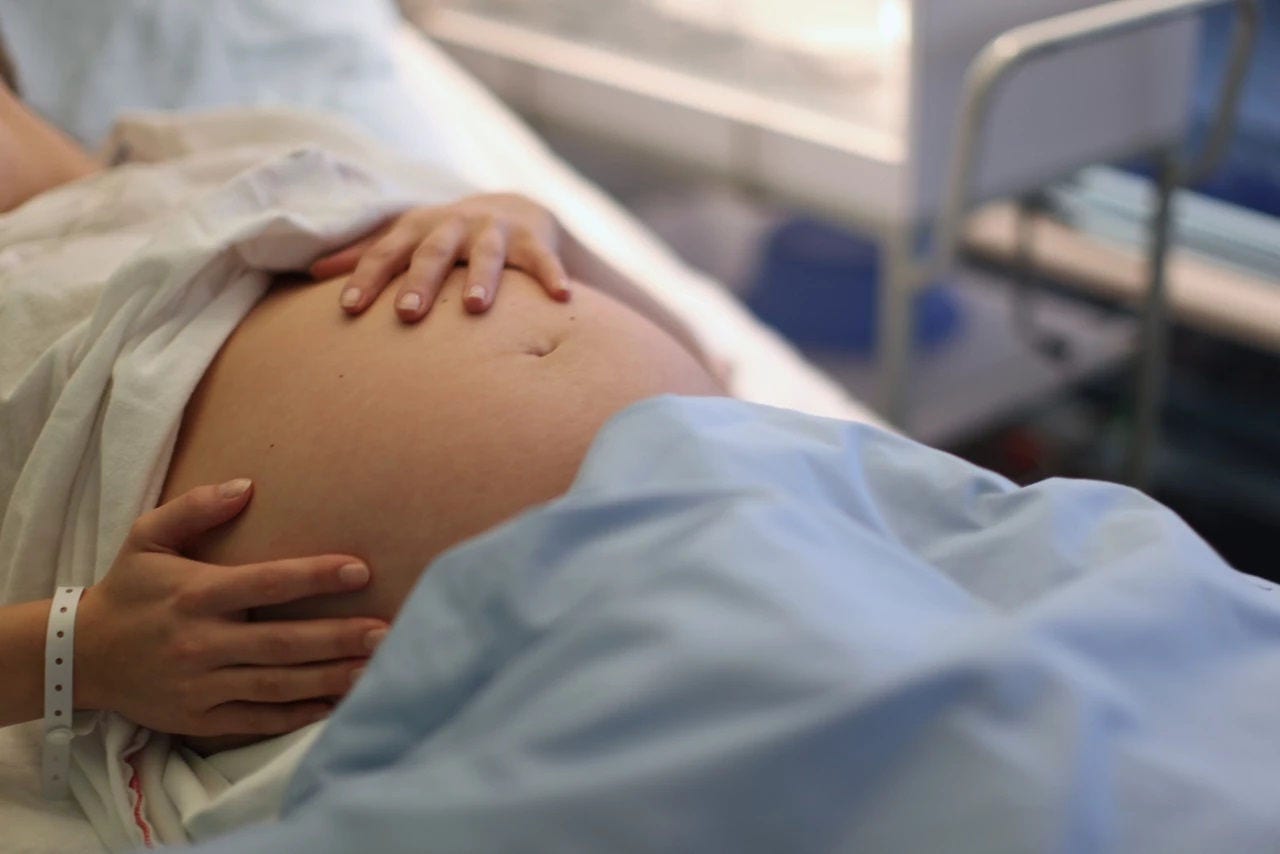
Your 25-week bump
As your bump grows, your centre of gravity shifts and you might notice that you’re having to walk a bit differently now4. Your growing bump might also be putting some extra pressure on your pelvis and lower back, causing back pain8. You can try these tips to help manage your bump:
- Wear comfortable shoes
- Keep your knees together when getting out of a car
- Use a pillow in-between your legs to help stabilise your pelvis when sitting
If your growing, 25-week bump is giving you any discomfort, try to rest with your feet up as much as you can – especially if you’re having trouble sleeping at night.
Weight gain in the second trimester
Healthy weight gain is important during pregnancy – it’s a sign that your baby is growing and developing, and that your body’s getting ready for breastfeeding.
Every pregnancy is different, and the amount of weight you gain will depend on things like your BMI before you become pregnant. But as a guide, you can expect to gain around 0.5kg per week in your second and third trimesters9.
Things to think about at 25 weeks pregnant
As you move closer to the end of your second trimester, here are some things you might want to start thinking about this week.
Screening for gestational diabetes
If you have any risk factors for developing gestational diabetes, you’ll likely be offered a screening called an oral glucose tolerance test (OGTT) when you’re between 24 and 28 weeks pregnant10. The screening involves two blood tests to check how your body copes with glucose.
If you think you should have been offered a screening for gestational diabetes and you haven’t heard anything, speak to your midwife or GP.
Your birth plan
A birth plan is a record of what you’d like to happen during labour and straight after you’ve given birth. It can include things like where you’d like to give birth, what pain relief you’d like, and whether you’d like skin-to-skin contact immediately once your baby’s born11.
You don’t have to have a birth plan, but if you would like to make one, then your midwife can help you. Some parents-to-be find it helps them feel calmer to know that their preferences are written down, but it’s important to remember that things don’t always go according to plan, and you might have to be flexible when the time comes11.
Telling your work
If you haven’t already, now’s the time to let your work know that you’re pregnant. The latest you can legally leave this conversation is 15 weeks before your due date, which is around now1. You’ll need a MatB1 certificate, which you’ll get from your midwife12.
Letting your employer know you’re pregnant also means you get maternity rights, like being able to take paid leave to go to your antenatal appointments1.
When to call your doctor
Now you’re around two-thirds of the way through your pregnancy, you probably know what feels normal for you, and what doesn’t. If anything doesn’t feel right, it’s important to get in touch with your midwife, maternity unit, or GP and tell them what’s happening.
You should contact someone on your healthcare team straight away if:
- You can’t feel your baby moving13
- You have severe stomach pain and vaginal bleeding, unusual vaginal discharge, or pain when you pee14
- You have a severe headache, vision problems, or sudden swelling in your hands, feet, or face15
- You start having regular contractions that get more intense as time goes on16
- Your waters break (this might feel like leaking or gushing from your vagina)16
- You feel pressure in your pelvis as though your baby is pushing down16
- NHS Start for Life. Week 25 [online] Available at https://www.nhs.uk/start-for-life/pregnancy/week-by-week-guide-to-pregnancy/2nd-trimester/week-25/ [Accessed August 2025]
- Public Health Scotland (2023). Attachment and bonding during pregnancy. [online] NHS inform. Available at: https://www.nhsinform.scot/ready-steady-baby/pregnancy/relationships-and-wellbeing-in-pregnancy/attachment-and-bonding-during-pregnancy/.
- HSE (2022). 25 to 28 weeks pregnant [online] Available at https://www2.hse.ie/pregnancy-birth/baby-development-pregnancy-stages/stages/25-28-weeks/ [Accessed August 2025]
- NHS Inform (2025). How your baby develops week to week [online] Available at https://www.nhsinform.scot/ready-steady-baby/pregnancy/your-baby-s-development/how-your-baby-develops-week-to-week/#week-25-to-32 [Accessed August 2025]
- HSE (2021). Sleep problems during pregnancy [online] Available at https://www2.hse.ie/pregnancy-birth/conditions/sleep-problems-during-pregnancy/ [Accessed August 2025]
- NHS (2024). Common health problems in pregnancy [online] Available at https://www.nhs.uk/pregnancy/related-conditions/common-symptoms/common-health-problems/ [Accessed August 2025]
- HSE (2023). Indigestion and heartburn in pregnancy [online] Available at https://www2.hse.ie/conditions/heartburn-indigestion-pregnancy/ [Accessed August 2025]
- HSE (2024). Back pain in pregnancy [online] Available at https://www2.hse.ie/conditions/back-pain/back-pain-in-pregnancy/ [Accessed August 2025]
- HSE (2022). Healthy weight gain during pregnancy [online] Available at https://www2.hse.ie/pregnancy-birth/keeping-well/health-lifestyle/healthy-weight-gain/ [Accessed August 2025]
- NHS (2022). Gestational diabetes [online] Available at https://www.nhs.uk/conditions/gestational-diabetes/ [Accessed August 2025]
- NHS (2024). How to make a birth plan [online] Available at https://www.nhs.uk/pregnancy/labour-and-birth/preparing-for-the-birth/how-to-make-a-birth-plan/ [Accessed August 2025]
- GOV.UK. Maternity certificate (form MAT B1) – guidance on completion. [online] Available at: https://www.gov.uk/government/publications/maternity-certificate-mat-b1-guidance-for-health-professionals/maternity-certificate-form-mat-b1-guidance-on-completion. [Accessed September 2026]
- NHS (2024). Your baby's movements [online] Available at https://www.nhs.uk/pregnancy/keeping-well/your-babys-movements/ [Accessed August 2025]
- NHS (2024). Stomach pain in pregnancy [online] Available at https://www.nhs.uk/pregnancy/related-conditions/common-symptoms/stomach-pain/ [Accessed August 2025]
- HSE (2024). Pre-eclampsia [online] Available at https://www2.hse.ie/conditions/pre-eclampsia/ [Accessed August 2025]
- HSE (2025). Signs you're going into premature labour [online] Available at https://www2.hse.ie/pregnancy-birth/labour/premature-labour/signs/ [Accessed August 2025]
Last reviewed: October 2026
Reviewed by Nutricia’s Medical and Scientific Affairs Team
More from pregnancy


Pregnancy topics




Any more questions?
Our specialist baby advisors and experienced mums are here to talk and ready to help whenever you need them.
Email us
Send us an email (8am-8pm Mon-Fri, 10am-5pm Sat)
Call Us
Call us on 1800 570 570 (8am-8pm Mon-Fri, 10-5pm Sat)
FAQs
For all the latest information